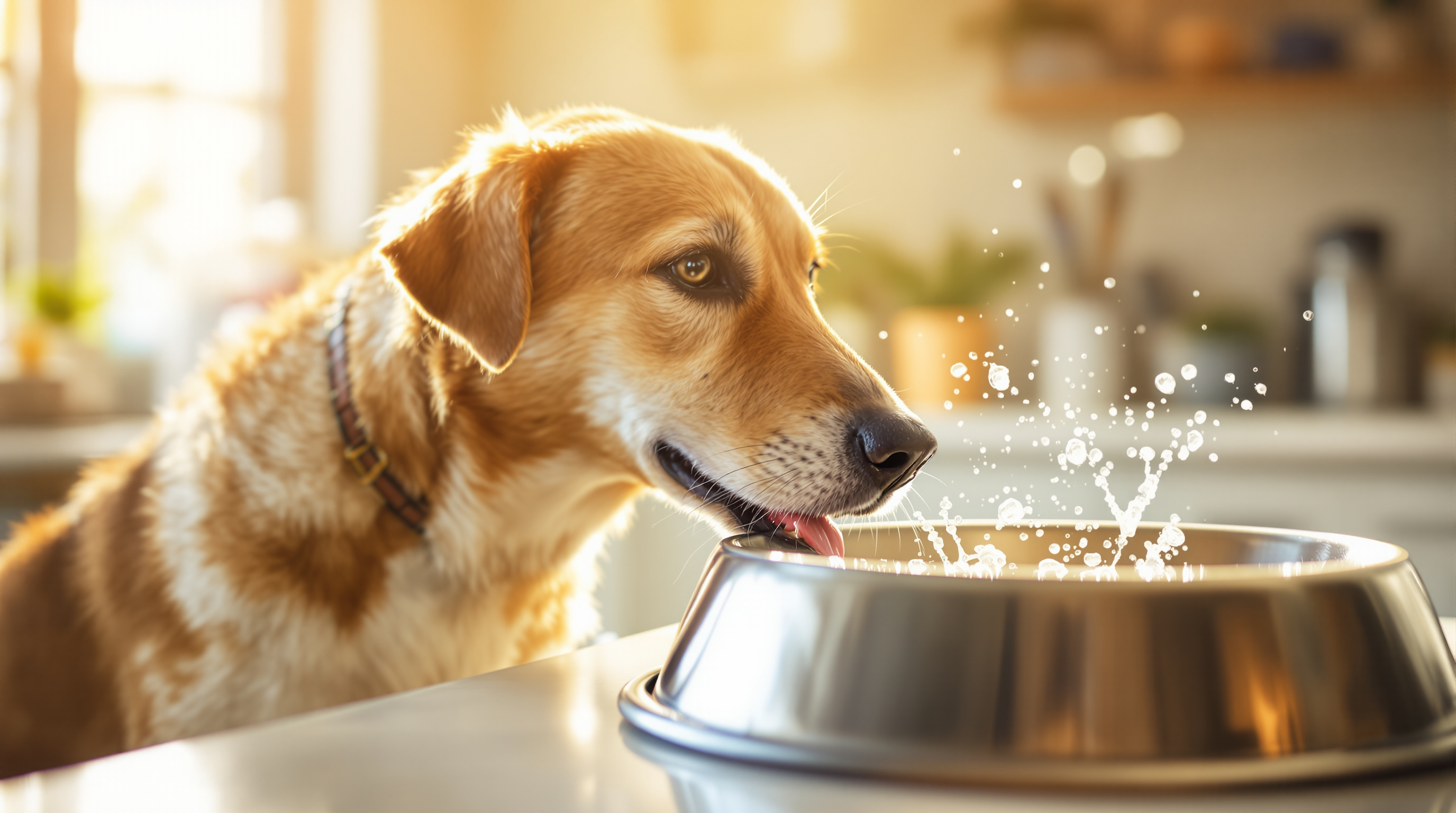
Because the symptoms of Cushing’s disease come on slowly and overlap with normal ageing, they are often mistaken for a dog “just getting old.” Knowing what to look for helps you raise the right questions with your veterinarian sooner.
Increased Thirst and Urination
This is the classic sign, present in an estimated 80–85% of affected dogs. Many dogs with Cushing’s drink two to ten times their normal amount of water, and the increased urination that follows can lead to accidents indoors in a previously house-trained dog. Because increased thirst also occurs with kidney disease and diabetes, it always deserves a veterinary work-up.
Symmetrical Hair Loss
Hair loss is another visible sign that often prompts a vet visit. It is usually evenly distributed on both sides of the body and typically does not leave bare, itchy patches the way some skin conditions do. The coat may also become dull, and the skin can be slow to regrow hair after clipping.
Increased Appetite
Excess cortisol can drive a strong, sometimes almost insatiable appetite. Dogs may beg constantly, raid the trash or steal food in ways they never used to. This can also contribute to noticeable weight gain.
Pot-Bellied (Enlarged) Abdomen
A sagging, “pot-bellied” appearance is common. It develops because the muscles of the abdominal wall weaken, fat is redistributed toward the belly, and the liver often enlarges under the influence of excess cortisol. The result is the rounded profile many owners notice in photographs over time.
Excessive Panting
Heavy panting that is out of proportion to activity or temperature can occur, although because dogs pant for many reasons this sign is easy to miss on its own.
Thinning Skin and Skin Changes
The skin may become thin, less elastic and slower to heal. Some dogs develop recurrent skin or urinary infections because excess cortisol suppresses the immune system. A less common but textbook sign is calcinosis cutis — firm, chalky mineral deposits in the skin.
Muscle Weakness and Low Energy
Weakening of the muscles can show up as lethargy, reduced interest in play or walks, a swaying gait, or difficulty jumping onto the couch or into the car. Owners sometimes describe their dog as simply “slowing down.”
A 2024 study in Animals described Cushing’s-associated myotonia or pseudomyotonia as rare. This muscle disorder involved stiffness, weakness, muscle loss or contractures. It occurred most commonly in adult dogs with chronic steroid exposure associated with pituitary-dependent disease; no adrenal-dependent cases were identified in that study.
When to Call Your Veterinarian
No single sign confirms Cushing’s disease, and each of these symptoms can have other explanations. If your dog is showing several of them — especially increased thirst, increased appetite and a changing body shape — it is worth booking an appointment. Keeping a short written log of what you see, and when, gives your vet valuable clues. The VCA Animal Hospitals library offers a helpful owner-friendly summary of these signs. When you are ready, read how vets diagnose Cushing’s disease.
To structure your notes, the ALIVE clinical score groups observations into drinking, urination, appetite, appearance and attitude/activity. Compare drinking, urination and appetite with your dog’s earlier pattern, and describe coat changes and activity. The score describes signs; treatment decisions remain your veterinarian’s.